
Nafs Center Partners with Dr. Francesca Bocca-Aldaqre for Five-Lecture Series on Mental Wellness Issues Impacting Our Community
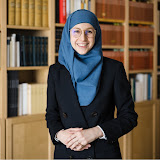
Nafs Center is honored to announce a special five-lecture series with Dr. Francesca Bocca-Aldaqre, focused on mental wellness issues impacting our community through the lens of Islamic spiritual well-being and Islamic Psychology.
This series is part of Nafs Center’s mission to promote mental wellness by connecting our community with meaningful education, trusted scholarship, and spiritually grounded guidance. Through these lectures, Dr. Francesca will help explore important questions related to emotional struggles, spiritual growth, family and community challenges, and the role of Islamic Psychology in understanding the human being.
Five-Lecture Series Overview
Lecture 1: The Map Was Always There: An Introduction to Islamic Psychology
Saturday, June 13 at 7:00 PM Pacific Time
This opening lecture introduces Islamic Psychology as a rich, deeply rooted tradition for understanding the human soul. Participants will explore concepts such as qalb, nafs, and rūḥ, and begin to see mental wellness through the language and framework of the Islamic tradition.
Lecture 2: Arrogance (Kibr) and Imposter Syndrome
Saturday, July 25 at 7:00 PM Pacific Time
This lecture examines the relationship between arrogance, low self-esteem, and imposter syndrome through the lens of Islamic Psychology. Drawing on classical insights, including al-Ghazālī’s understanding of the diseases of the heart, it explores how both self-inflation and self-fixation can arise from the same spiritual root.
Lecture 3: My Husband Is Not My Therapist: The Psychology of Muslim Marriages
Saturday, September 12 at 7:00 PM Pacific Time
This lecture reframes Muslim marriage as a sacred covenant between two souls, rather than a relationship expected to meet every emotional need. It explores common patterns of marital struggle through concepts such as kibr, vulnerability, admiration, and the inner work required for healthier relationships.
Lecture 4: The Screen and the Soul: Pornography Addiction Through an Islamic Lens
Saturday, October 17 at 7:00 PM Pacific Time
This lecture addresses pornography addiction with seriousness, compassion, and spiritual clarity. It explores how compulsive desire affects the nafs, while bringing together Islamic spiritual insights and contemporary understandings of addiction and reward pathways.
Lecture 5: The Entitled Child and the Exhausted Parent: Narcissism in Family Systems
Saturday, November 14 at 7:00 PM Pacific Time
This final lecture looks at how patterns of entitlement, control, shame, and woundedness can develop within family systems. It examines how character is shaped in relationships and how Islamic Psychology can help parents and adult children better understand what has been cultivated, inherited, and transmitted.
Summary of Dr. Francesca Bocca-Aldaqre’s Background
Dr. Francesca Bocca-Aldaqre is an Italian scholar, educator, author, and practitioner whose work bridges psychology, neuroscience, Islamic spirituality, and traditional Islamic learning. Her academic background includes studies in cognitive psychology, neuro-cognitive psychology, and systemic neuroscience, while her Islamic studies include formal diplomas, traditional ijazat, and training in Islamic Psychology.
Her journey into Islam began in Damascus in 2009, where she was introduced to Islamic spiritual learning and the foundations of Islamic Psychology through women’s study circles. Since then, she has dedicated her work to understanding the human being through both modern psychological sciences and the Islamic spiritual tradition.
She has authored several books, directed the Averroè Institute for Italian-speaking Muslim children, and teaches Islamic Psychology at Cambridge Muslim College. Her work is rooted in scholarship, lived spiritual tradition, and years of service to Muslim communities.
Detailed Bio of Dr. Francesca Bocca-Aldaqre
Dr. Francesca Bocca-Aldaqre was born in Italy in 1987. She began her academic journey in Milan, where she completed a Bachelor of Science in Psychological Sciences with a focus on cognitive psychology. She later moved to Munich, Germany, where she earned her Master’s degree in Neuro-Cognitive Psychology.
Her personal and spiritual journey took a life-changing turn in 2009, when she embraced Islam in Damascus. While living in Syria, she immersed herself in religious study and was introduced to the foundations of what is now often called Islamic Psychology through spiritual classes and women’s learning circles. This experience shaped the direction of her life’s work: bringing together the study of the mind, the heart, the soul, and the Islamic tradition.
After completing her Master’s thesis through a project related to neurological diagnosis at Harvard University, Dr. Francesca continued her academic path with a PhD in Systemic Neurosciences. During this period, she divided her time between Munich and Damascus, continuing her neuroscience research while deepening her study of Islam and traditional spiritual knowledge.
Dr. Francesca’s intellectual journey has also been enriched by her love of languages and cultures. Her mother tongue is Italian, and she has studied French, Latin, German, Arabic, English, Bosnian, and Persian, the latter inspired by her interest in classical Islamic poetry.
In addition to her academic work in psychology and neuroscience, Dr. Francesca has completed multiple diplomas in Islamic sciences, including Islamic Studies and Islamic Theology, and holds ijazat in various traditional subjects. She also earned a Diploma in Islamic Psychology from Cambridge Muslim College.
Her work is rooted not only in formal study, but also in living relationships with authorized teachers and shuyukh in spiritual, psychological, and educational disciplines, particularly in Bosnia and Damascus. This connection to living tradition gives her work a depth that is both scholarly and spiritually grounded.
Dr. Francesca is also an author, educator, poet, and community builder. She has written several books, mostly in Italian, on a range of topics. She authored the first handbook of Islamic theology in the Italian language, as well as the first scholarly study on traditional Islamic education of children in Italian. Her creative work also includes poetry and writing for theater.
For the past ten years, she has served as the director of Averroè Institute, the first Italian-language madrasa, which has taught thousands of Italian-speaking children the foundations of Islam through traditional subjects such as Qur’an, hadith, ‘aqida, adab, tafsir, and more.
Today, Dr. Francesca teaches a Diploma in Islamic Psychology at Cambridge Muslim College, while continuing her work in teaching, research, and clinical practice.
More details about each lecture will be shared in separate posts.